Mental
Reaction time, attention, processing speed, executive function — measured to the 1/100th of a millisecond.
Frequent, objective cognitive readiness checks — not a once-a-year assessment — for warfighter performance programs: blast overpressure, TBI, fatigue, and return-to-duty. Developed in response to a requirement from the U.S. Navy Bureau of Medicine and Surgery, with paradigms rooted in legacy military cognitive testing and validated across extreme operational environments.
DANA quantifies reaction time (speed) and percent correct (accuracy) into trackable scores — so performance programs can measure change from an individual service member's own baseline across training cycles, deployments, exposures, and recovery.
The TFF framework asks: are we sustaining and improving performance across domains? DANA provides the objective brain-performance measurement layer underneath TFF domains.
Reaction time, attention, processing speed, executive function — measured to the 1/100th of a millisecond.
Sensitive to sleep restriction and prolonged wakefulness — validated in WRAIR convoy and caffeine countermeasure studies.
Used to evaluate whether supplements, stimulants, and metabolic interventions translate into measurable cognitive benefit.
Detects how exertion, recovery status, and physical stress affect cognitive readiness.
Validated across cold, heat, altitude, hypoxia, jungle, desert, shipboard, and Arctic conditions.
Tracks how clinical interventions impact cognitive performance, informing recovery, treatment progress, and return-to-readiness decisions.
Pairs cognitive performance with standardized questionnaires (PHQ-9, GAD-7, PCL-C, ISI, PSQI, PEG-3).
Continuity of measurement supports veteran and family-health follow-through after service transition.
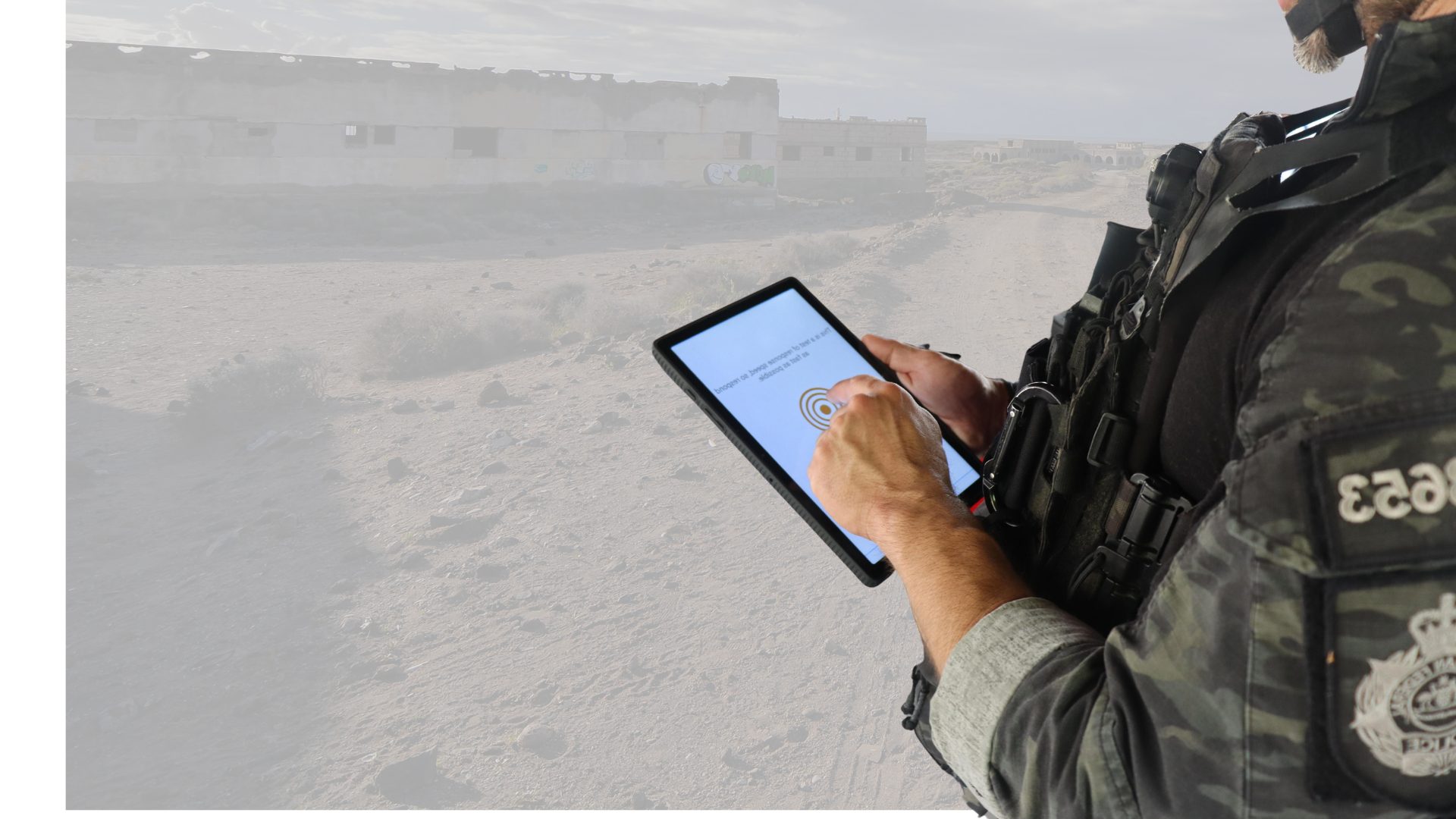
Capture in the field with no connectivity; sync encrypted when the network returns. Built for austere settings.
Simple & procedural reaction time, Go/No-Go, spatial processing, match-to-sample, code substitution, memory search — rooted in legacy military cognitive testing.
An established military normative dataset supports reliable-change interpretation for longitudinal use.
FDA-cleared; HIPAA, 21 CFR Part 11 & SOC 2 Type II compliant; encrypted in transit and at rest.
A validated, self-administered assessment that scales across units without adding proctor or clinician time — no specialized training required to run it.
Roll individual results up into a program-wide view of cognitive readiness — filterable by unit, position, and injury status — to manage readiness at scale, not one record at a time.
Secure APIs integrate DANA's assessment data into existing databases and electronic health record systems — DANA has successfully integrated with Smartabase and other platforms.
Subject, Examiner, Clinician, and Administrator roles — administration separated from interpretation.
A standardized longitudinal record — not a single point in time.
Establish each service member's individual cognitive baseline in about 5 minutes — on the devices units already carry.
Reassess across training cycles, deployments, and after exposures — offline in the field, syncing encrypted when connectivity returns.
Quantify change from baseline to support return-to-duty decisions and long-term brain-health documentation into veteran care.
Supporting early detection, targeted intervention, and safer return to training or duty.
Administer pre-course or pre-training to establish individual cognitive baselines prior to blast exposure.
Use on-body blast gauges to document each training serial, linking blast event details with peak overpressure and impulse.
Administer DANA repeatedly during the training cycle and post-course to assess cognitive performance changes relative to baseline.
Flag individuals or exposure windows for review when blast burden crosses defined thresholds.
Modify training schedule, increase recovery time, enhance monitoring, or refer for medical/concussion evaluation.
Use improvement toward baseline performance, along with symptom review and clinical judgment, to support data-informed return to duty.
DANA is embeddable in complementary programs like Blast Buddy, which pairs blast-overpressure sensor data with DANA's cognitive assessment for education, monitoring, and recovery.
Used across military and commercial partners to measure cognitive readiness, track performance change, and support operational decision-making.
Supporting U.S. Space Force — used within the USSF Continuous Fitness Assessment research to evaluate cognitive fatigue alongside wearables and longitudinal metrics.
Used within its POTFF human performance model to measure cognitive performance, establish longitudinal trends, and support data-informed optimization for special operations personnel.
Warfighter Performance Department — using DANA in cold-weather operations research to evaluate nutritional interventions and preserve cognitive performance in extreme environments.
Using DANA in a DHA-funded study assessing blast effects on Marines — quantifying cognitive readiness and how blast exposure, sleep, and recovery affect operational performance.
See the full origin story and peer-reviewed publications behind this evidence base.
37 of DANA's 48 peer-reviewed studies are military-relevant — spanning 2013–2025 and proving out operational workflows and utility across blast exposure, extreme environments, fatigue, and behavioral health. See all publications →
The original feasibility and reliability study confirmed DANA as a reliable, accurate, and portable cognitive assessment tool built for both clinical and operational use, resistant to learning effects from repeat testing. Military Medicine, 2013. View study →
A Walter Reed Army Institute of Research study found DANA's Procedural Reaction Time task can detect small but real declines in cognitive function after blast exposure too mild to cause a diagnosed concussion. Frontiers in Neurology, 2019. View study →
A Walter Reed Army Institute of Research study of .50-caliber rifle training found that combining DANA with TBI-related blood biomarkers (amyloid beta peptides) may provide a fuller picture of brain stress from repeated low-level overpressure than either measure alone. Frontiers in Neurology, 2020. View study →
A Naval Health Research Center pilot study found DANA detected slower reaction times and lower attention during winter warfare training that correlated with stress- and growth-related hormone changes — supporting its use to monitor readiness in extreme cold environments. Military Medicine, 2024. View study →
A Florida Institute for Human and Machine Cognition study used DANA's Code Substitution test to show that low-oxygen conditions impair higher-level thinking, and that a ketone supplement measurably improved performance under the same hypoxic conditions. Aerospace Medicine and Human Performance, 2021. View study →
A Walter Reed Army Institute of Research study of 50 hours of continuous wakefulness confirmed DANA as an operational performance predictor — a mobile tool for detecting and predicting fatigue-related impairment in driving and other operational tasks, and for evaluating countermeasures like caffeine. Poster, Military Health Systems Research Symposium, 2015.
A Rutgers University and Duke University School of Medicine study of active-duty Coast Guard personnel found DANA provides quantifiable data on how PTSD and depression impact cognitive speed and accuracy — data unreachable through self-reported symptoms alone. Frontiers in Psychology, 2017. View study →
An Army-funded study of active-duty personnel validated that DANA reliably detects decreased cognitive performance associated with common psychological distress, PTSD, depression, and sleep-related issues — forming the basis of DANA's military normative dataset. Applied Neuropsychology, 2017. View study →
An independent study by the University of Tennessee Health Science Center, Naval Medical Center Portsmouth, and the University of Pennsylvania confirmed DANA's validity against the Military Acute Concussion Evaluation (MACE), with no significant learning effect and the added benefit of portability and shorter test time for remote, deployed environments. Frontiers in Neurology, 2020. View study →
Talk to our team about readiness programs, research protocols, contracting, and integration.
Talk to the Team